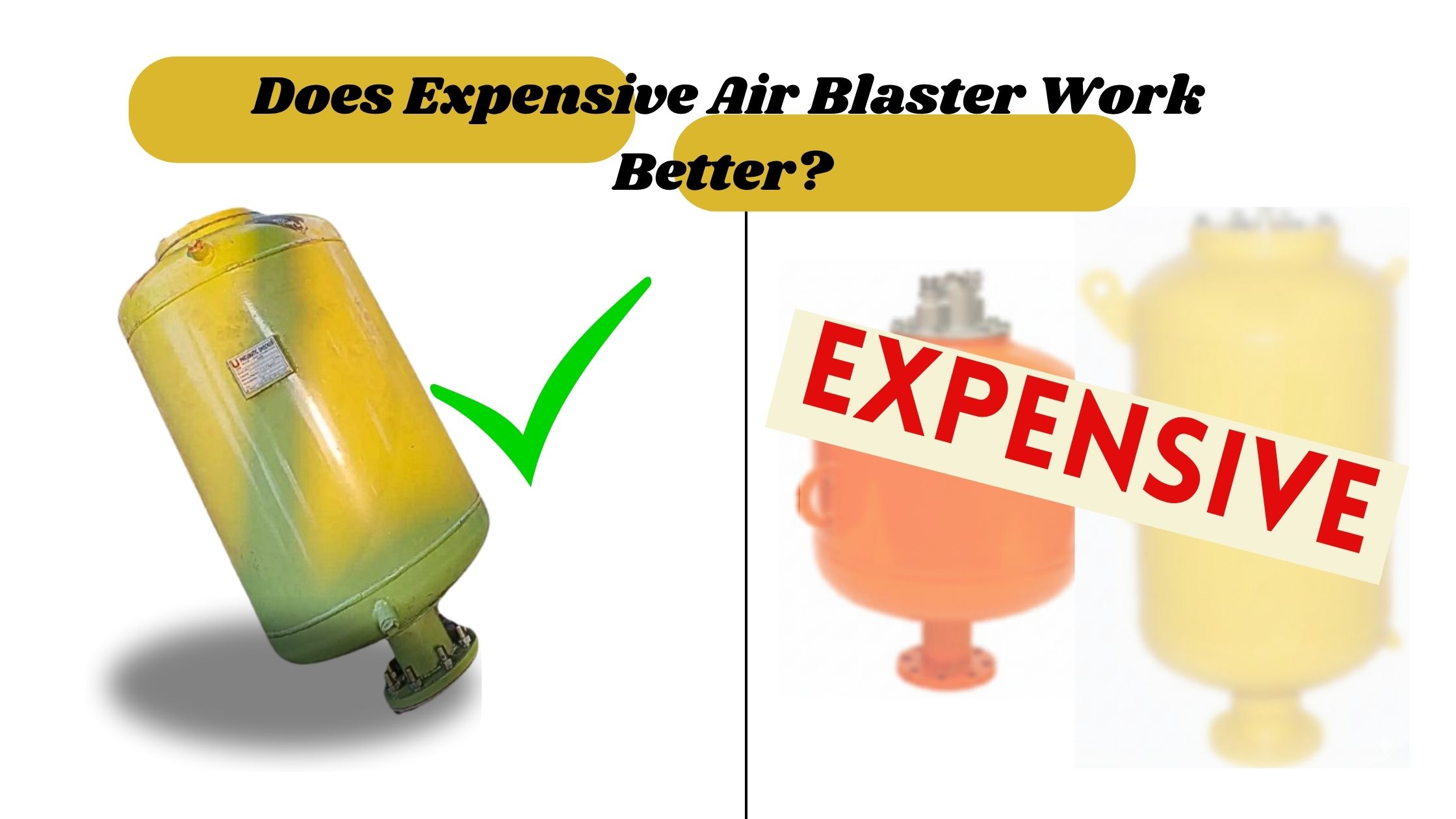
Does Expensive Air Blaster Work Better? Let’s Break the Myth
A few months ago, I got a call from a plant manager I’ve known for years. He was frustrated. His production line kept clogging, and he was ready to spend a fortune on a high-end industrial air blaster. “Look,” he said, “I believe the expensive one has to work better. Cheap ones just don’t last.
I smiled on the other end of the line. Not because I was amused, but because I’ve heard this same belief hundreds of times. As someone who manufactures air blasters at Ubon India, I’ve seen plants waste money on premium-priced blasters that performed no better—sometimes worse—than our affordable ones.
So today, let me share what I’ve learned from over a decade in this business. Let’s talk about whether price really equals performance.
Don't chase price tags. Match nozzle, panel, receiver, and spare parts to your plant. Performance follows engineering, not expense.
Ubon India Engineering Team
The Day I Realized Price Is a Poor Judge
Years ago, we supplied our standard air blaster to a cement plant. They had previously used an imported blaster that cost nearly four times more. The plant supervisor was skeptical. “This looks too simple,” he said.
We installed it anyway. Same air receiver size. Same nozzle diameter. Same pneumatic control panel sequence. Six months later, that supervisor called me. Not to complain—to ask for ten more units. His expensive blaster had already needed two spare parts replacements. Our affordable unit was still running without a single hiccup. That was my lightbulb moment. Expensive doesn’t mean effective. Smart engineering does.
What Actually Makes an Air Blaster Perform?
Let me break down the real factors. Forget the price tag for a minute.
1. The Air Blaster Nozzle – Small Part, Big Difference
The nozzle determines how air hits the material. A poorly designed nozzle—even on a ₹xx lakh blaster—will create weak, scattered airflow. A well-calculated nozzle on an affordable blaster delivers focused, high-impact air exactly where needed.
We’ve seen expensive blasters use fancy coated nozzles that crack under heat. Meanwhile, a simple hardened steel nozzle, properly sized, lasts for years. Price doesn’t design aerodynamics. Physics does.
2. Pneumatic Control Panel – The Brain Matters More Than the Brand
This is where most expensive blasters hide their cost. They add touchscreens, Wi-Fi connectivity, and glossy interfaces. But ask yourself—does your plant floor need a smartphone to operate an air blaster?
A reliable pneumatic control panel needs three things: durable valves, clear sequencing, and easy maintenance. We keep ours simple. One plant engineer told me, “Your panel is boring. That’s why I love it. Nothing breaks.” Expensive panels with extra features often introduce failure points. Cheap doesn’t mean fragile. Simple means reliable.
3. Air Receiver – Size and Placement Over Price
An oversized air receiver on a cheap blaster will outperform an undersized receiver on an expensive blaster every single time. It’s basic storage math. I’ve watched plants buy premium blasters with tiny receivers, then wonder why they need to cycle every two seconds.
Match the air receiver to your line’s air supply and clog pattern. That’s the secret. Not the brand name stamped on the side.
4. Spare Parts Availability – The Hidden Cost of Premium
Here’s a story that still bothers me. A client bought an expensive XYZ air blaster. After eight months, a seal failed. The spare part cost ₹xxxx and took six weeks to arrive. Production stopped for days.
Our spare parts for similar blasters? Available off the shelf. Cost? Under ₹xx for the same seal. When you buy expensive, you often buy into a proprietary ecosystem. Affordable blasters use standard components. That means cheaper, faster, and easier repairs.
Real Performance Factors (Not Price Factors)
After manufacturing over 5,000 air blasters and visiting more than 200 plants, here’s what I’ve learned actually matters:
| Factor | Impact on Performance |
|---|---|
| Correct sizing for your application | High |
| Nozzle design and quality | Very High |
| Pneumatic control panel calibration | High |
| Air receiver condition | Medium-High |
| Installation angle and position | Very High |
| Regular maintenance schedule | Medium |
| Spare parts availability | High |
| Brand price tag | Low |
Notice something? Price is at the bottom. Not because expensive blasters are bad — but because performance depends on the right factors.
The Myth’s Origin – And Why It Persists
I think the “expensive is better” myth started with early industrial automation. Back in the 90s, cheap really did mean poorly made. But manufacturing has changed. Good components are now affordable. Precision machining is accessible.
Yet old beliefs die hard. Plant managers hear “imported” and assume superiority. Sales reps from premium brands fuel the fear: “If you buy cheap, you’ll regret it.” But regret comes from poor performance, not a low price tag.
Real Performance Test: Expensive vs. Affordable
Let me describe what we actually see in the field. An expensive air blaster might have a polished body and a fancy manual. But inside, its valve response time depends on the same pneumatic principles as any other blaster.
Our affordable blaster uses a direct-acting solenoid valve. Their expensive one uses a pilot-operated valve with five extra moving parts. Which one fails more often? Exactly. The nozzle angle? Both can be adjusted. The air receiver capacity? Both depend on your compressor. The only real difference is that you paid three times more for marketing brochures and a foreign brand sticker.
What You Should Look For Instead of Price
Next time someone tells you “expensive air blaster works better,” ask them these questions:
- What is the nozzle material and diameter?
- Can I get spare parts locally within 24 hours?
- Is the pneumatic control panel repairable by my electrician?
- Does the air receiver match my line’s actual volume needs?
If they can’t answer clearly, the price is hiding something.
Our Honest Take at Ubon India
We manufacture affordable air blasters. That’s what we do. But I’m not saying every Pocket Friendly blaster is good. There are poorly made cheap ones too. What I am saying is: price alone tells you nothing. A well-designed, affordable air blaster with the right nozzle, a simple pneumatic control panel, a correctly sized air receiver, and easily available spare parts will outperform a mismatched expensive blaster every single shift.
That plant manager I mentioned earlier? He now runs fourteen of our blasters. His expensive one sits in storage. He laughs about it now. “I paid for anxiety,” he said. “Not performance.” Don’t let the myth cost you. Test the blaster. Check the components. Ignore the price tag until you’ve verified the engineering. Because at the end of the day, compressed air doesn’t care how much you spent. It only cares about the path you give it.
To Know More About Air Blaster And other parts. You Can read More Blogs...Just By strong>Clicking Here..